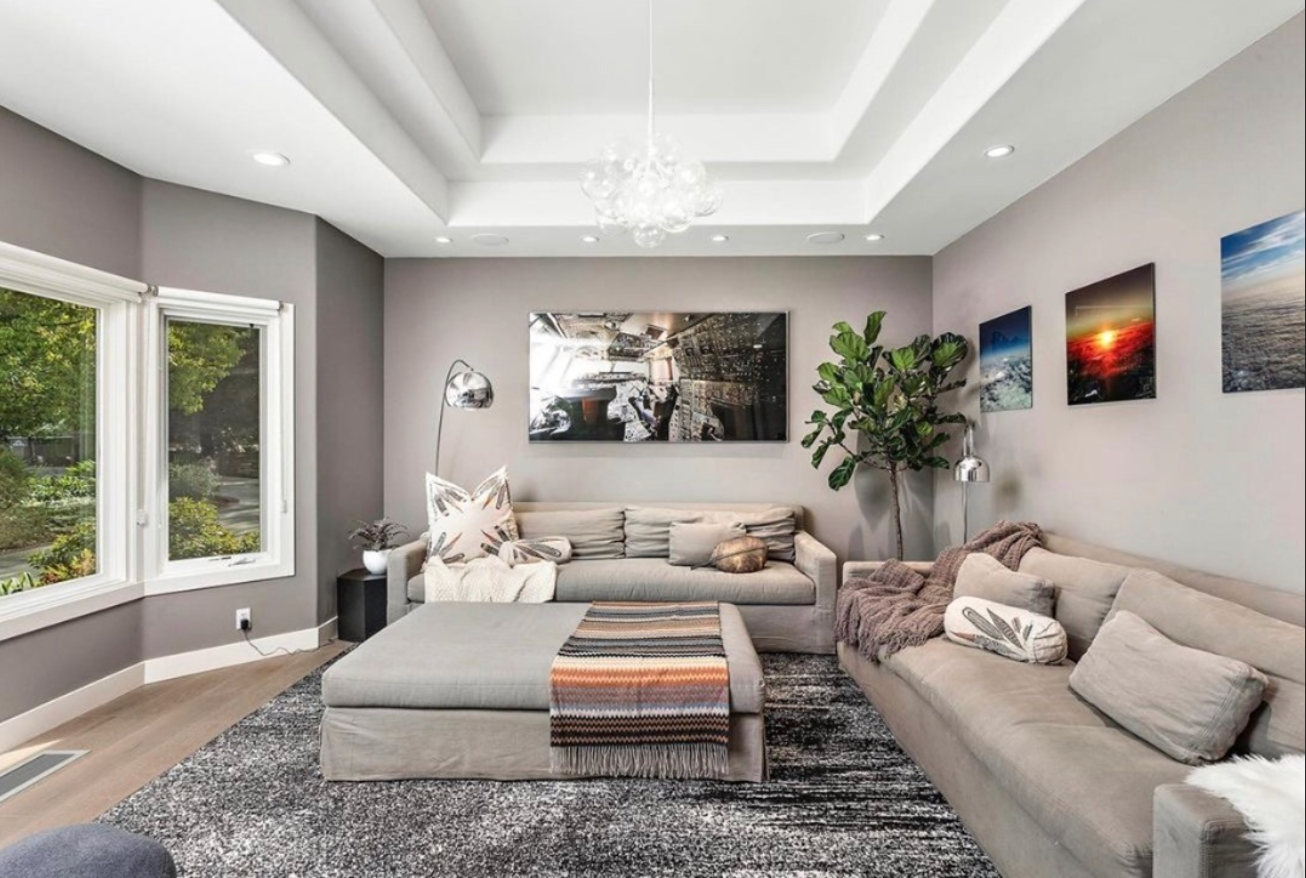
After a very generous holiday season this year, I looked around my house and had one overwhelming thought: we’ve got too much stuff.
If you’ve got kids, you probably know exactly what I mean. Toys seem to multiply overnight. Art supplies migrate from room to room. And stuffed animals? My son treats every single one like it has constitutional rights. If you've seen Toy Story you know where the blame lies.

So I decided to press pause and start paying attention to what I was actually craving. It wasn’t an empty house. It wasn’t strict minimalism. I’m never going to be the person who lives in a sparse white room with three perfect pieces of furniture and nowhere comfortable to put a coffee cup.
I love color. I love texture. I love vintage pieces, books, layers, patterned rugs, odd little objects, and homes that feel collected over time.
But I was drawn to something about minimalism: the calm, the intention, the sense that everything in the room has earned its place. I didn’t want less personality. I wanted less noise.
That’s when the idea of gentle minimalism started to make sense to me. Less, but better.
For our family, this began with a buying pause long enough to interrupt the habit of filling gaps the moment we notice them. Then I started going through the house asking myself the questions many of us have heard before: Would I buy this again today? Is it useful? Is it beautiful?
It’s a simple standard, but it’s not always an easy one. Especially when the item in question was expensive and perfectly fine. Some of the hardest things to donate aren’t the cheapest things. They’re pieces we spent good money on but never really loved. The things we keep because we feel guilty letting them go. But as those pieces leave, something unexpected happens. The rooms begin to breathe.
Less, But Not Less Personality
I think this is where minimalism gets a little misunderstood.
A room doesn’t have to be beige, empty, or aggressively serene to feel calm. Some of my favorite rooms are colorful, layered, and full of charm. I love a room with pattern and books and art and texture. I love a little visual tension. I love when something feels slightly unexpected.
But even the best layered rooms have restraint.
They have pauses.
They have places where the wall, the floor, or the air around an object gets to participate in the design.
 (Image credit: Victoria-Maria/Belen Imaz et Pedro Bermejo)
That’s the part that’s finally clicking for me. The rooms I admire most aren’t necessarily the rooms with the most beautiful things. They’re the rooms where the beautiful things have enough space around them to be noticed. It’s what gives your eye somewhere to rest. It helps a room feel balanced instead of crowded. It lets the important pieces stand out instead of making everything compete for attention.
And apparently, my house needed a little less competition and a lot more editing.
As we donate the things we no longer use or love, certain pieces suddenly feel more important. A vintage cabinet looks more special when it’s not surrounded by random objects. A favorite piece of art has more presence when everything on the wall around it isn’t competing for attention. A light fixture becomes more sculptural when the room around it has room to breathe.
Sometimes the best thing you can give a beautiful object isn’t another object next to it. Sometimes the best thing you can give it is space.
Every Room Needs a Hero
Every room needs a hero. Not every object waving its hand and asking to be noticed. Just one or two pieces that give the room its point of view.
Sometimes that hero is obvious. A vintage dining table with beautiful worn wood. A velvet sofa in the perfect shade of green (chartreuse is my jam). A rug that makes the whole room feel warmer and more interesting. A piece of art that immediately tells you something about the people who live there.
And sometimes, of course, it’s the light fixture.
Lighting has always felt a little like jewelry to me. It may not be the whole outfit, but when it’s right, everything suddenly feels finished. A chandelier over a dining table, a sculptural pendant in an entry, or a pair of sconces beside a piece of art can change the entire feeling of a room.

But lighting doesn’t always have to be the star to be important, sometimes its job is to make the star come alive.
A beautiful fixture over an antique dining table draws your eye to the place where everyone gathers. A picture light or sconce gives a favorite painting the presence it deserves. The right lamp beside a mid-century sofa can make the whole corner feel intentional instead of accidental. Even a statement rug feels more grounded when the lighting above it creates warmth, rhythm, and atmosphere.
That’s the part we sometimes forget. Lighting isn’t only decorative. It directs attention. It creates mood. It tells your eye where to go. It’s bossy, but in a helpful way. :)
When a room has too many competing pieces, nothing really gets to sing. The art competes with the rug, the rug competes with the pillows, the pillows compete with the accessories, and the light fixture becomes just one more thing in the visual pile. But when a room is edited, the important pieces have room to do their job. The hero gets to be the hero.
Where This Fits With Whimsy
In the last Design Notes, I wrote about making your home a little weirder and more whimsical - this feels like the next step. Whimsy gives a home personality. Editing gives that personality room to shine.
Less, but better, isn’t about having a perfect home or an empty home or a beige home. It’s about making fewer, more intentional choices. It’s about letting go of the things that only take up space, so the things you truly love have more presence.
Our house will probably always have books, color, texture, art projects, and more stuffed animals than any reasonable family should own. I’ve made peace with this (mostly).
But these days, I’m trying to buy a little less, choose a little more carefully, and leave enough space for the pieces I love to have their moment.
Sometimes, the most beautiful thing you can add to a room is a little more room.
If you’ve been thinking about this too, a couple of pieces I loved reading recently:
The Power of Negative Space: Designing Rooms That Breathe — Oh So Kel
A good reminder that empty space isn’t wasted space. It’s what gives the pieces you love room to stand out.
Sentimentality Is a Design Principle — Katie Elliott
This one’s a perfect bridge into what I want to write about next: the difference between clutter and the meaningful, collected pieces that make a home feel like yours.